
In busy industrial and commercial environments, lifting and moving heavy goods safely is an important part of daily operations. Warehouses, factories, retail stores, logistics centers, and production facilities all require equipment that can handle loads efficiently while reducing the risk of workplace injuries. This is where a Scissor Lift Table Singapore solution becomes valuable for businesses that want to improve productivity and maintain safer working conditions.
Scissor lift tables are designed to raise, lower, and position heavy materials with ease. Instead of relying on manual lifting, workers can use hydraulic lifting equipment to move products to the right height for packing, loading, assembly, or storage. This helps create a smoother workflow and reduces unnecessary physical strain on employees.
Common Uses of Scissor Lift Tables
Scissor lift tables are widely used across different industries because they provide practical support for many lifting tasks. In warehouses, they are often used to move pallets, cartons, and heavy products between storage areas and workstations. Workers can easily adjust the height of the platform to match shelving or conveyor systems, making loading and unloading more efficient.
Factories and manufacturing plants also rely on scissor lift tables during assembly, packaging, and production work. Heavy machinery parts, tools, and raw materials can be positioned at the correct working height to reduce bending and repetitive lifting. This helps improve worker comfort while maintaining a faster production process.
Loading docks are another common area where lift tables are used. Trucks and containers are often loaded and unloaded with goods of different sizes and weights. A hydraulic scissor lift table helps bridge height differences between loading platforms and transport vehicles, making material handling faster and safer.
Retail stores, workshops, and distribution centers can also benefit from using warehouse lift table systems. Employees can use the equipment to organize stock, handle bulky items, and move goods between work areas without relying entirely on manual labor.
Benefits of Using a Scissor Lift Table
One of the main advantages of using a Scissor Lift Table Singapore solution is improved workplace safety. Manual lifting of heavy materials can lead to back injuries, muscle strain, and long-term health issues for employees. Lift tables reduce the need for workers to bend, stretch, or lift awkward loads by hand.
Scissor lift tables also support faster material handling. Goods can be moved, positioned, and transferred more quickly compared to manual lifting methods. This is especially useful in warehouses and production facilities where speed and efficiency are essential to daily operations.
Businesses can also improve accuracy and workflow by using industrial lift table equipment. When products are positioned at the right height, workers can complete tasks more comfortably and precisely. This is particularly important for packaging, labeling, assembly, and inspection work.
Another advantage is that scissor lift tables make loading and unloading easier. Whether moving goods between shelves, trucks, conveyors, or machinery, the equipment helps reduce delays and improves overall operational efficiency.
Fixed and Mobile Scissor Lift Tables
Fixed scissor lift tables are installed in one location and are commonly used in areas where lifting tasks happen regularly. These lift tables are ideal for production lines, loading bays, assembly stations, and packaging areas where heavy materials need to be raised and lowered frequently. Because they are designed for permanent installation, they are often suitable for heavy-duty lifting solutions and larger load capacities.
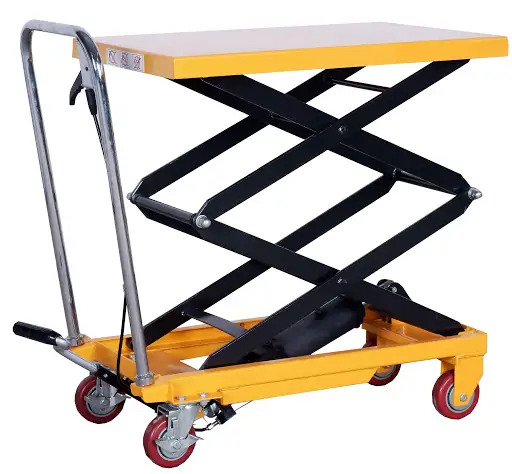
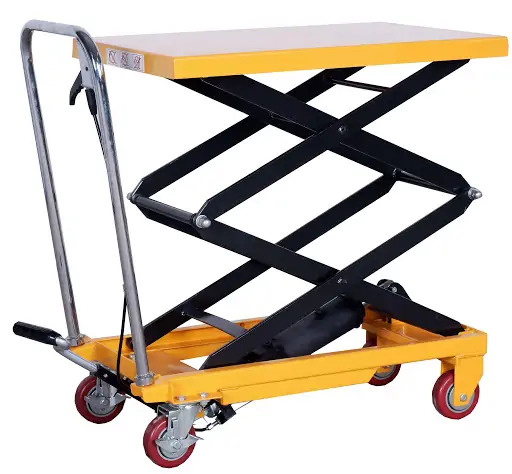
Mobile scissor lift tables are designed with wheels or casters, allowing them to be moved between different work areas. This makes them a flexible choice for warehouses, workshops, and retail environments where lifting tasks take place in different locations. Employees can transport the lift table to where it is needed, improving convenience and reducing the need for multiple lifting systems.
The choice between fixed and mobile lift tables depends on factors such as available space, lifting frequency, and the type of materials being handled. Some businesses may even use both options to support different parts of their operation.
Features to Look for in a Scissor Lift Table
When selecting a scissor lift table, businesses should consider several important features to ensure the equipment matches their operational needs.
Load capacity is one of the most important factors. Different lift tables are designed to support different weights, so it is important to choose a model that can safely handle the loads being lifted.
Lifting height is another important feature. Some businesses only need low-level lifting for pallets and boxes, while others require higher lift ranges for loading docks, shelves, or production equipment.
Platform size should also be considered. A larger platform can support oversized goods, machinery parts, or multiple items at once, making it easier to handle bulky materials.
Hydraulic operation is commonly used in scissor lift tables because it provides smooth and controlled lifting. Hydraulic systems are reliable, easy to use, and suitable for many industrial environments.
Safety features are equally important. Businesses should look for lift tables with anti-slip surfaces, emergency stop buttons, overload protection, safety rails, and locking mechanisms. These features help reduce workplace accidents and protect both workers and equipment.
Durability is also essential for businesses that require heavy-duty lifting solutions. Strong steel construction, reliable hydraulic components, and corrosion-resistant finishes can help extend the lifespan of the equipment and ensure consistent performance.
Importance of Safety and Proper Usage
While scissor lift tables are designed to improve safety, proper use and maintenance are still important. Employees should receive training on how to operate the equipment correctly, including safe loading practices and emergency procedures.
Regular maintenance is also necessary to keep the lift table in good condition. Hydraulic systems, moving parts, wheels, and safety features should be inspected frequently to identify any signs of wear or damage. Preventive maintenance can reduce the risk of equipment failure and help avoid unexpected downtime.
Businesses should also ensure that Scissors Lift tables are not overloaded. Exceeding the recommended load capacity can damage the equipment and create safety risks for workers. By following manufacturer guidelines and performing regular inspections, businesses can maintain a safer and more reliable work environment.
A Scissor Lift Table Singapore solution can provide significant benefits for businesses that need safer and more efficient material handling equipment. From reducing worker fatigue to improving productivity and supporting faster loading operations, lift tables are a practical investment for warehouses, factories, workshops, and commercial facilities. For businesses looking for reliable lifting equipment, Scissors Lift offers solutions designed to support a wide range of industrial and commercial lifting needs.